

When Silence Becomes Strategy in Modern Politics
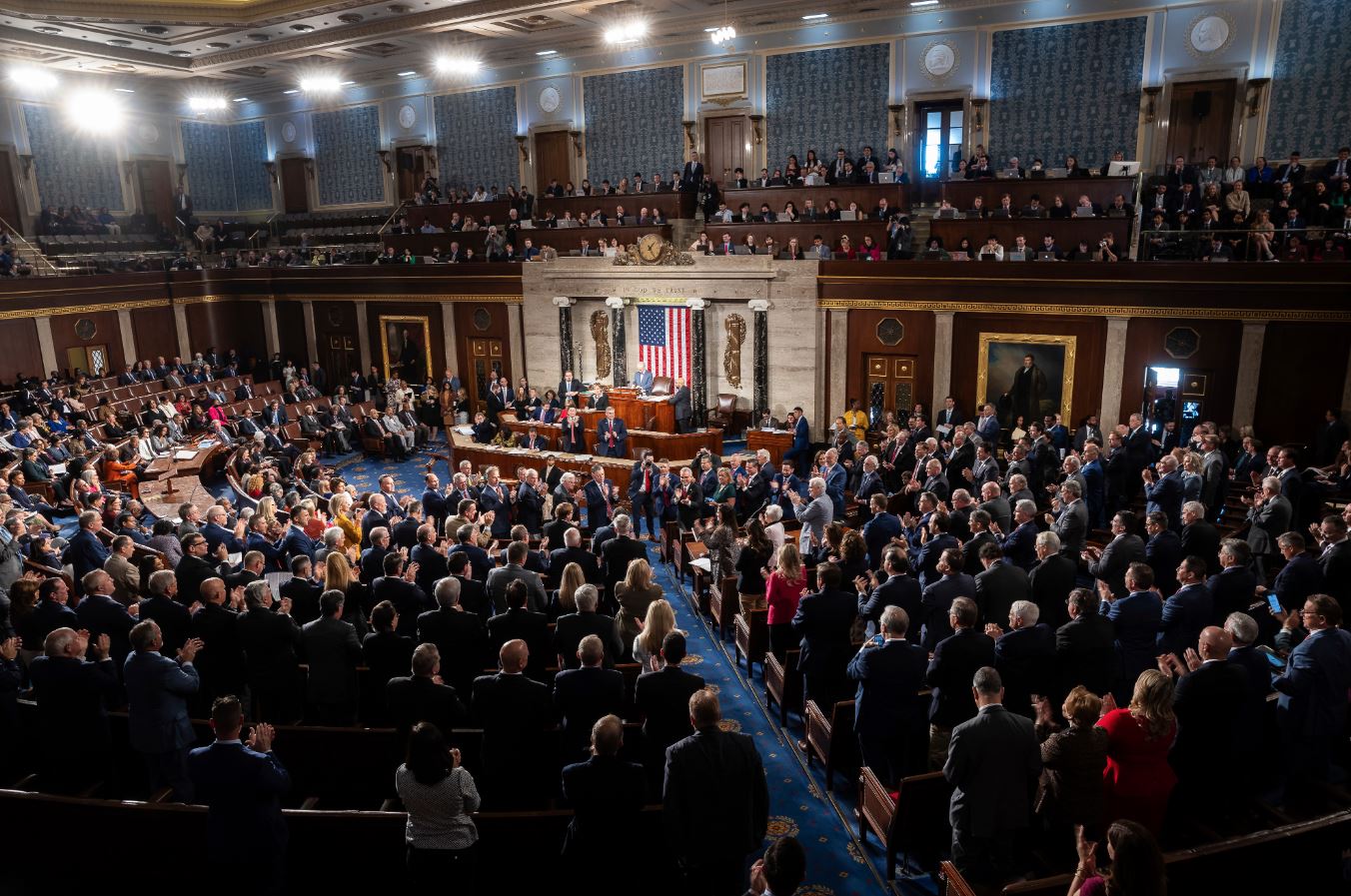
Political Influence Shapes the Spaces Between Citizens and Authority
The Subtle Geometry of Power
Politics rarely unfolds in the obvious spectacle of televised debates or legislative votes. More often, its true structure lies in the invisible geometry that organizes influence and opportunity. Power moves through these quiet corridors, aligning interests, creating hierarchies, and shaping the choices that societies believe are their own. This geometry defines who gets to speak, which ideas are given room to grow, and what policies survive the collision between public aspiration and institutional inertia. It is a web, not a ladder, made up of relationships, favors, and perceptions that dictate access to the levers of change. In every democracy, this geometry determines how ideals are translated into laws and how those laws translate back into lived experience. Beneath the visible theater of governance lies this intricate design, where small decisions accumulate into large consequences and where the architecture of power is both human and habitual.
Citizens sense this geometry instinctively even when they cannot see it. They understand that the path between a vote and a policy is rarely straight. Bureaucracy, lobbying, and negotiation bend that path into complex loops that require persistence to navigate. Power is not inherently corrupting, but it is always transformative. Those who step into its circle are reshaped by its demands and its constant balancing act between conviction and compromise. In recognizing this, a mature democracy learns to design checks and balances not merely as legal mechanisms but as cultural habits that remind all participants of their shared vulnerability to ambition. The geometry of power, once acknowledged, becomes a landscape that can be studied and adjusted rather than a mystery to fear.
The Performance of Leadership and the Theater of Persuasion
Leadership in politics is an evolving performance that demands both authenticity and adaptability. Every leader walks a tightrope between truth and presentation. The public demands sincerity, yet it also craves spectacle, creating a paradox where credibility and charisma must coexist. This theater of persuasion is not inherently deceptive. It is an ancient form of communication that uses imagery, tone, and timing to express collective aspirations. When executed with integrity, it becomes a form of civic poetry that binds citizens together around shared purpose. When abused, it devolves into manipulation that fractures trust. The modern political stage amplifies this tension because every gesture, every phrase, is replayed endlessly in the digital arena, stripped of context and frozen into fragments that define public perception.
The true test of leadership lies in resilience rather than perfection. Great leaders recover from missteps by listening and recalibrating. They resist the urge to impose narratives that flatter their egos and instead cultivate narratives that clarify the common interest. Their speeches, decisions, and silences compose the rhythm of governance, revealing whether they view authority as service or possession. Citizens, in turn, must learn to distinguish substance from performance. The survival of democracy depends on audiences who are critical, not cynical, and on leaders who treat persuasion as a bridge, not a weapon. Political leadership, at its best, is not the art of command but the discipline of coherence between word and deed.
Citizenship as a Living Dialogue
Citizenship thrives only when it is exercised as dialogue rather than declaration. A vote is a beginning, not an end. The strength of a democracy rests on the continued participation of its citizens in the shaping of policy, culture, and accountability. When people believe their role ends at the ballot box, the space between elections fills with decisions made in silence. True engagement means asking questions, attending local meetings, contributing to public discussions, and demanding transparency. This participation transforms governance from a distant structure into a living organism that responds to collective voice. Citizenship becomes a form of stewardship, where every individual has a share in maintaining the ethical integrity of the political ecosystem.
Yet, modern life complicates this dialogue. Information overload creates fatigue, and polarization turns conversation into confrontation. The internet, once celebrated as the great equalizer, often fragments attention and amplifies outrage. The challenge for contemporary citizens is to find rhythm in their engagement, balancing vigilance with patience. Dialogue cannot exist without listening, and listening requires time. When people learn to slow down their political reactions and instead reflect, they reclaim power from the emotional machinery of digital politics. In doing so, they nurture a democratic culture that prizes thought over noise and participation over performance.
Media as the Architect of Perception
Media institutions act as the architects of political perception. They frame the boundaries within which citizens interpret reality. Every choice of headline, image, and source shapes how society perceives events and intentions. This power brings an enormous responsibility to maintain accuracy, fairness, and perspective. However, commercial pressures and algorithmic dynamics often push media outlets toward sensationalism. The race for attention can distort the scale of importance, where trivial controversies overshadow substantive debates. The fragmentation of audiences across digital platforms intensifies this effect, as each group receives a tailored version of the truth designed to confirm rather than challenge its beliefs.
Journalism’s noblest role is to expand the horizon of understanding. When media resists simplification, it invites citizens into complexity and equips them to evaluate evidence independently. Investigative reporting holds institutions accountable, but opinion journalism must also learn humility, acknowledging uncertainty when facts are incomplete. As misinformation proliferates, the credibility of the press becomes a public trust that must be constantly renewed. Citizens share in this duty by supporting media literacy education and by rewarding sources that demonstrate transparency. The freedom of the press remains one of the most fragile pillars of democracy because its power depends on the faith of its audience. When that faith erodes, demagogues step into the vacuum with narratives designed to serve power rather than truth.
The Unseen Machinery of Bureaucracy
Bureaucracy is often misunderstood as the opposite of creativity, yet it is the silent engine that translates political vision into tangible outcomes. Public servants, analysts, and administrators transform broad promises into measurable actions through countless procedural steps. This machinery ensures continuity between electoral cycles, preserving institutional memory. However, it can also become a shield against accountability if left unchecked. The bureaucratic language of forms, committees, and approvals often conceals moral choices behind technical phrasing. Reform efforts frequently collide with this inertia, as rules designed to prevent corruption inadvertently create inefficiency and alienation.
To revitalize bureaucracy, governments must cultivate an ethos of empathy within administration. Procedures should protect fairness without suffocating initiative. Digital governance offers tools for transparency, but technology cannot substitute for trust. When bureaucrats see themselves as partners of citizens rather than gatekeepers, the machinery of governance becomes humane. It is within these offices and meeting rooms that the real texture of democracy is woven, far from the cameras and headlines. Efficiency, when guided by compassion, restores dignity to both service providers and recipients. In this sense, bureaucracy is not a monolith but a mirror of society’s moral priorities.
Ideology as an Inherited Compass
Every society carries ideological inheritances that define its political vocabulary. These systems of belief give meaning to justice, equality, and progress. They are the collective stories through which nations explain who they are and what they aspire to become. Yet, ideology is not immune to decay. When it hardens into certainty, it blinds citizens to evolving realities. When it dissolves into relativism, it leaves them directionless. The vitality of ideology lies in its ability to adapt without losing identity. Political movements that endure across decades succeed because they reinterpret their principles to meet new challenges while staying anchored in core values. This adaptability turns ideology from a cage into a compass.
The danger of the present age is ideological exhaustion. Many voters feel trapped between extremes, alienated by polarized rhetoric that leaves no room for nuance. The digital sphere intensifies this fatigue, rewarding outrage over understanding. For democracy to remain dynamic, societies must rediscover the art of principled disagreement. This requires education systems that teach civic reasoning and historical context rather than mere slogans. When citizens understand the lineage of ideas, they can critique them without abandoning them. Ideology then becomes a tool of inquiry, not an instrument of division, guiding politics toward reflection rather than reaction.
The Global Mirror of Political Responsibility
Globalization has transformed politics into a shared experiment where domestic choices ripple across borders. Economic crises, pandemics, and environmental disasters reveal that isolation is an illusion. Political responsibility now extends beyond national interests toward planetary stewardship. This expanded perspective challenges traditional models of governance that prioritize immediate gains over long-term sustainability. Nations must cooperate not out of charity but out of self-preservation. The ethics of foreign policy, trade, and environmental protection demand empathy as a strategic resource. To govern effectively in this interconnected age, leaders must cultivate an awareness of consequence that transcends the boundaries of citizenship.
However, global cooperation is fragile because it rests on voluntary alignment rather than enforceable authority. International organizations strive to balance sovereignty with collective action, often hindered by the asymmetry of power among states. The task of this century is to construct mechanisms that allow global governance to function without erasing cultural identity. Technology, communication, and education will play decisive roles in this evolution. As global citizens become more aware of their interdependence, they will demand accountability that matches the scale of modern challenges. The mirror of global politics reflects our shared vulnerability as much as our shared potential, reminding humanity that governance is ultimately an expression of collective survival.
The Pulse of Political Renewal
Renewal is the heart of democratic endurance. Every society faces moments when cynicism overshadows hope and participation dwindles under the weight of disillusionment. Yet politics regenerates through the courage of individuals who refuse complacency. Reform movements, citizen assemblies, and grassroots initiatives breathe life back into institutions that appear rigid. Renewal does not always require revolution. Sometimes it begins with a simple act of honesty, a local reform, or an unexpected alliance across partisan lines. These small gestures, repeated across communities, create momentum for broader transformation. Political renewal is not a miracle but a discipline, a practice of rediscovering purpose within imperfection.
As history unfolds, each generation inherits both the achievements and the failures of its predecessors. Democracy is sustained not by nostalgia for a golden past but by imagination for a fairer future. The vitality of that future depends on education that encourages critical thought, leadership that values humility, and citizens who understand that freedom is inseparable from responsibility. When these elements align, politics transcends mere administration and becomes a collective art form, shaping the destiny of nations through the moral choices of ordinary people. The pulse of political renewal beats wherever courage meets conscience, reminding us that power, when guided by integrity, remains humanity’s most transformative instrument for justice and hope.